Denys Brylov
Researcher • Analyst • Peacebuilding Practitioner
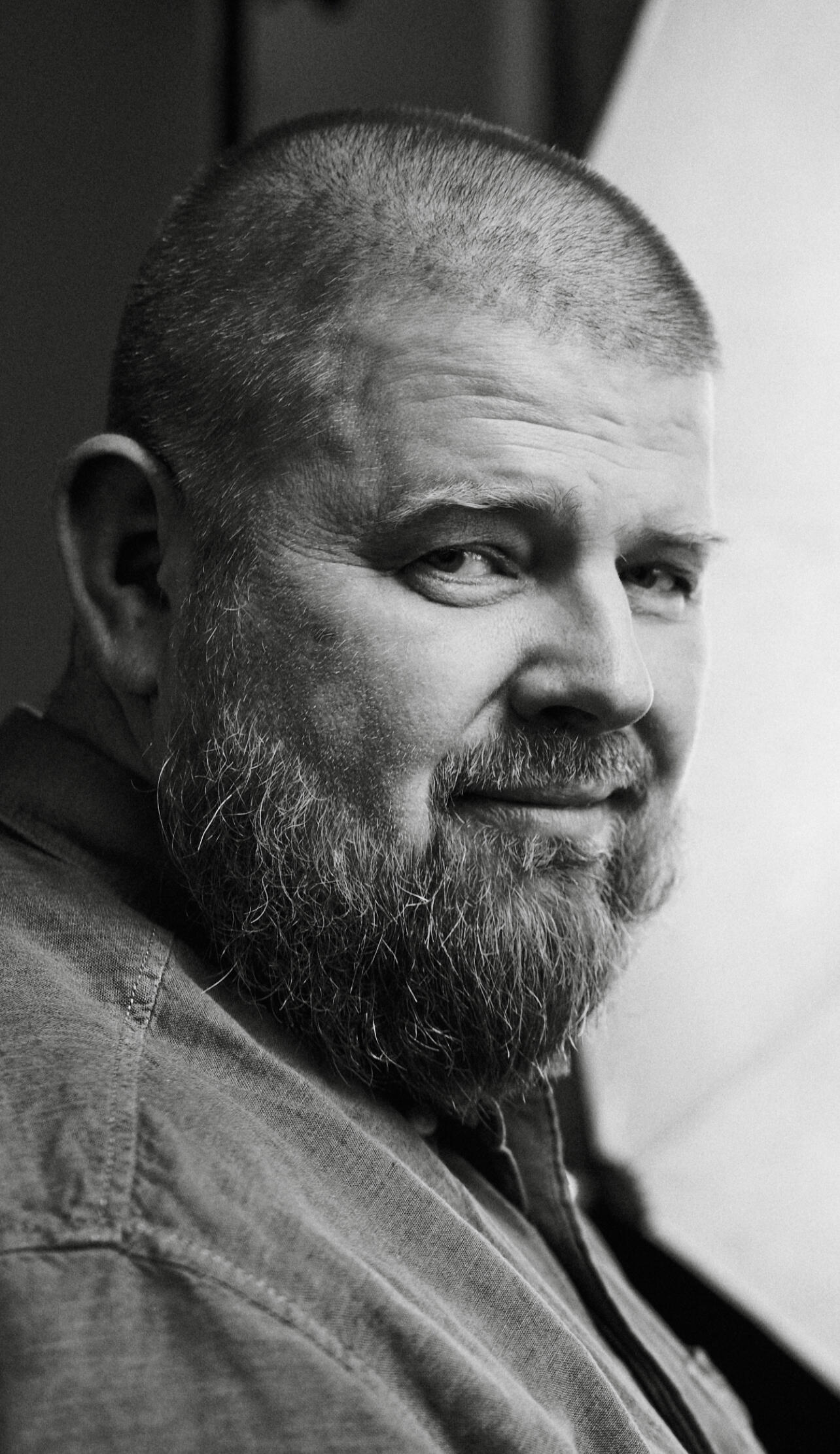
Denys Brylov is a Ukrainian researcher and analyst specializing in religion, conflict, and peacebuilding in Eastern Europe and the post-Soviet space. His work focuses on the intersections of religious identities, war, social cohesion, and political transformation, with particular attention to Ukraine and Muslim communities in the region.He currently serves as Head of the Modern Studies Department at the A. Krymskyi Institute of Oriental Studies of the National Academy of Sciences of Ukraine and was previously affiliated with the Leibniz-Zentrum Moderner Orient (ZMO) in Berlin.Combining academic research with applied peacebuilding practice, Denys has contributed to international projects on conflict transformation, religious pluralism, and adaptive peacebuilding in wartime Ukraine. His publications include work for USIP, The Conversation, Forum Transregionale Studien, and leading academic publishers and journals.His research explores how religious actors shape public life during periods of crisis and social change, examining questions of identity, coexistence, memory, and resilience in contemporary societies.He is the author of (Un)Known Islam in Ukraine and numerous studies on religion, nationalism, and peacebuilding in Ukraine and beyond.Portrait by Valentyn Kuzan.
Research
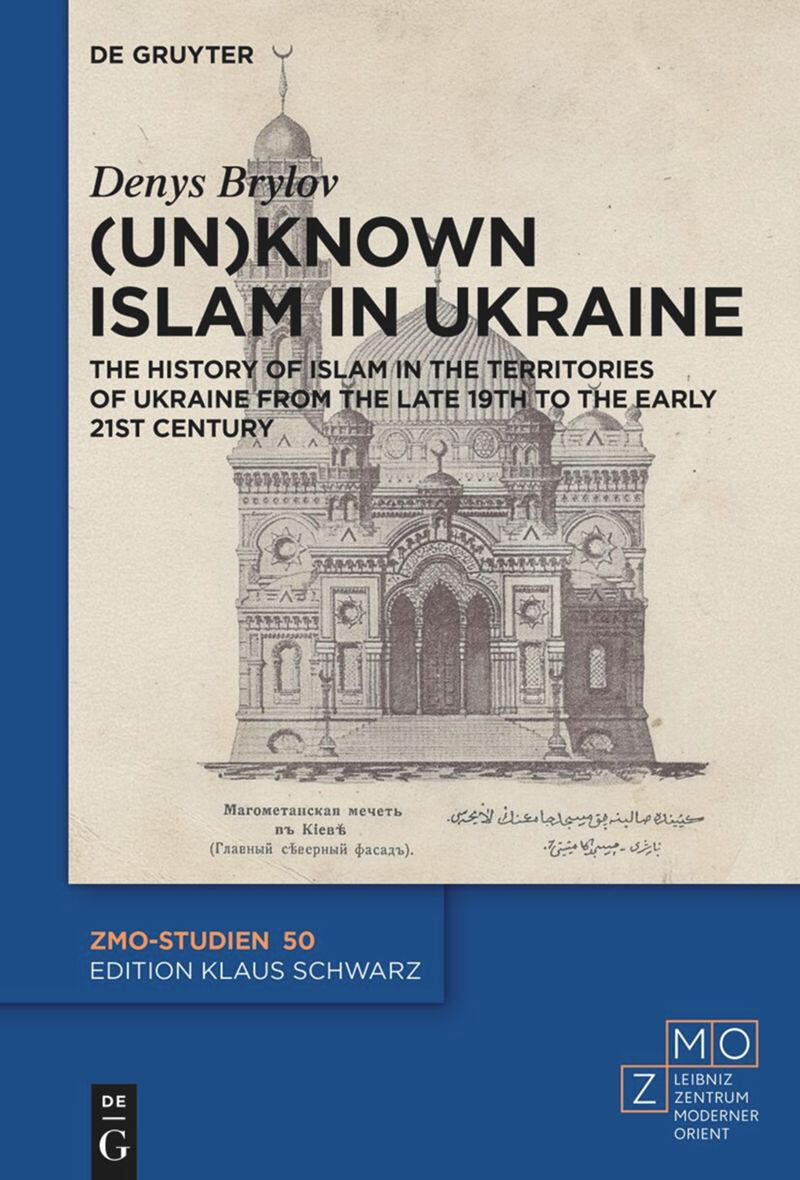
(Un)Known Islam in Ukraine: The History of Islam in the Territories of Ukraine from the Late 19th to the Early 21st Century is a monograph by Denys Brylov published by De Gruyter in the ZMO-Studien series of the Leibniz-Zentrum Moderner Orient (ZMO). The book explores the historical development of Muslim communities in the territories of present-day Ukraine, tracing the transformations of Islamic institutions, identities, intellectual traditions, and state policies from the late imperial period to the contemporary era.The study examines the complex relationships between Islam, empire, nationalism, secularization, and post-Soviet state formation. Particular attention is given to the diversity of Muslim experiences in Ukraine, including Crimean Tatars and other Muslim communities whose histories have often remained marginal within broader European narratives.View publication
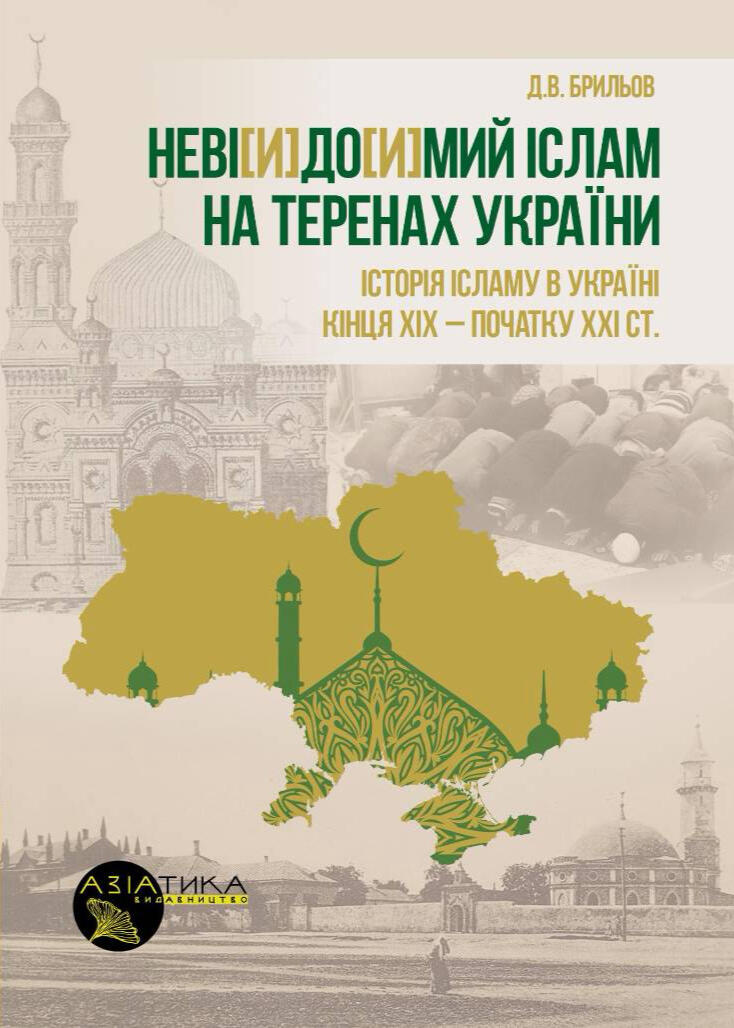
Unknown Islam in the Territories of Ukraine: The History of Islam in Ukraine from the Late 19th to the Early 21st Century
(Nevidomyi islam na terenakh Ukrainy: Istoriia islamu v Ukraini kintsia XIX — pochatku XXI st.)Denys Brylov
Asiatyka Publishing, Kyiv, 2021 · In UkrainianThis Ukrainian-language monograph examines the historical development of Islam and Muslim communities in the territories of present-day Ukraine from the late nineteenth century to the early twenty-first century. The book explores the transformations of Islamic institutions, religious identities, and public representations of Islam within imperial, Soviet, and post-Soviet contexts.Particular attention is given to Crimean Tatar communities, transnational Islamic networks, religious revival after the collapse of the Soviet Union, and the relationship between religion, nationalism, and state formation.View publication
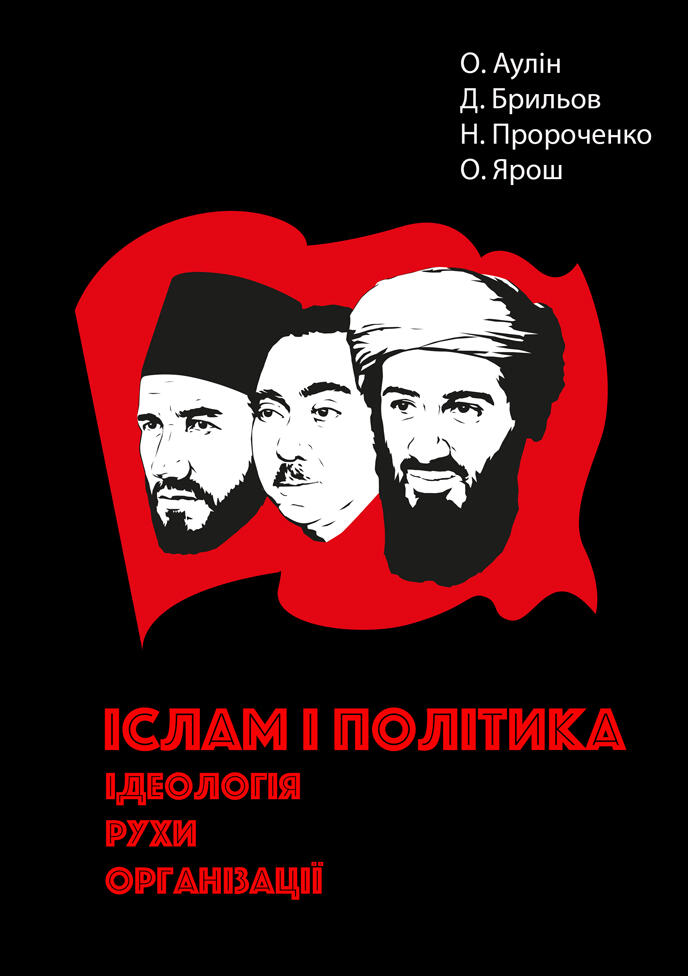
Islam and Politics: Ideology, Movements, Organizations
(Islam i polityka: Ideolohiia, rukhy, orhanizatsii)Oleksandr Aulin, Denys Brylov, Nataliia Prorochenko, Oleg Yarosh
Kyiv, 2019 · In UkrainianThis collective volume examines the intersections of Islam and politics in contemporary Muslim societies, focusing on ideological movements, religious organizations, political mobilization, and transnational Islamic networks. The book explores the historical and contemporary development of political Islam, including questions of religious authority, identity formation, radicalization, social activism, and the role of Islamic movements within global and regional political processes.Combining perspectives from religious studies, political science, and anthropology, the authors analyze how Islamic actors and organizations negotiate modernity, nationalism, state power, and global political change across different Muslim contexts. The volume also reflects on the diversity of Islamic political thought and the plurality of Muslim experiences beyond simplified geopolitical narratives.View publication
Research Projects2025–2027
The Russian-Ukrainian War and the Latest Security Developments in Asian Countries and Regions
A. Krymskyi Institute of Oriental Studies, National Academy of Sciences of Ukraine (Kyiv)2023–2025
Sufi Fundamentalists: The Al-Ahbash Transnational Sufi Network in Western Europe
Leibniz-Zentrum Moderner Orient (ZMO), Berlin2022–2024
Islam and Muslims in the Context of State-Religious Relations (20th–Early 21st Centuries): Politics, Ideology, Identity
A. Krymskyi Institute of Oriental Studies, National Academy of Sciences of Ukraine (Kyiv)
Selected Articles2025
Brylov, D. “Between Civic Loyalty and Religious Identity: Has the Muslim World’s Attitude Towards the Russian-Ukrainian War Affected Ukrainian Muslims?”
Shìdnij svìt, 4, 151–167.Brylov, D. “Priests on the Front Lines: The Religious Factor in the Russian Army.”
Bulletin de l’Observatoire international du religieux, No. 56.
2024
Lehti, M., Brylov, D., de Coning, C., & Kalenychenko, T.
“Winning the Peace: The Role of Agonistic and Adaptive Peacebuilding in Sustaining Social Cohesion in Ukraine.”
International Negotiation, 30(1), 155–179.Brylov, D. & Kalenychenko, T.
“The Identity Migration of Religious Actors during the War in Ukraine (since 2014).”
In Viktoriya Sereda (Ed.), War, Migration, Memory: Perspectives on Russia’s War Against Ukraine. Bielefeld: transcript Verlag.
2023
Brylov, D. “Ukrainian Muslims in the Context of the Russo-Ukrainian Conflict.”
Review of Ecumenical Studies, 15(3), 505–525.Brylov, D., Kalenychenko, T., & Kryshtal, A.
Mapping the Religious Landscape of Ukraine.
USIP Peaceworks, No. 193.Brylov, D., Kalenychenko, T., & Smytsnyuk, P.
“Ukraine’s Far-Right Movements and Their Connections to the Religious World.”
In Gionathan Lo Mascolo (Ed.), The Christian Right in Europe: Movements, Networks, and Denominations. Bielefeld: transcript Verlag.Brylov, D. “From Nordic Symbols to Sledgehammer Executions: Inside the Wagner Group’s Neo-Pagan Rituals.”
The Conversation.Brylov, D. “Halal in Contemporary Ukraine: Markets and Administration.”
In Rano Turaeva & Michael Brose (Eds.), Religious Economies in Secular Context. London: Palgrave Macmillan.Brylov, D. & Kalenychenko, T.
“Ukraine’s Religious Landscape: Between Repression and Pluralism.”
In Bálint Madlovics & Bálint Magyar (Eds.), Ukraine’s Patronal Democracy and the Russian Invasion.Brylov, D. “Résiliation du contrat de location de la Laure supérieure et de la Laure inférieure…”
Bulletin de l’Observatoire international du religieux, No. 45.Brylov, D. & Kalenychenko, T.
“Identity Migration of Orthodox Churches During the War in Ukraine (Since 2014).”
Forum Transregionale Studien.Brylov, D. “Des païens aux templiers: la vie religieuse au quotidien au sein de la société militaire privée Wagner.”
Bulletin de l’Observatoire international du religieux, No. 42–43.Brylov, D., Kalenychenko, T., & Mandaville, P.
“Assessing Kyiv’s New Focus on ‘Spiritual Independence’.”
Berkley Forum.
2022
Kalenychenko, T. & Brylov, D.
“Ukrainian Religious Actors and Organizations After Russia’s Invasion: The Struggle for Peace.”
Transatlantic Policy Network on Religion and Diplomacy Policy Brief.Brylov, D. “Les ‘légions musulmanes’ de l’armée russe.”
Bulletin de l’Observatoire international du religieux, No. 37.Brylov, D. & Kalenychenko, T.
“Celui qui sauve une vie sauve le monde entier…”
Bulletin de l’Observatoire international du religieux, No. 37.Brylov, D. “Marseillaise Versus Jihadism, or the French Experience in Combating Islamist Radicalization.”
Shìdnij svìt, 2, 95–109.
2021
Brylov, D. “Political Practices of Ukrainian Muslims: Between the Apolitical and the Radical.”
e-Rhizome, 3(2), 103–120.Brylov, D., Kalenychenko, T., & Kryshtal, A.
The Religious Factor in Conflict Research on the Peacebuilding Potential of Religious Communities in Ukraine.
Analytical Report, PAX.Brylov, D. “Being a Minority: Muslim Minorities and Religious Education in Ukraine.”
In Religious Diversity at School: Educating for New Pluralistic Contexts. Springer VS.Brylov, D. & Kalenychenko, T.
“Religion and Nationalism in Post-Soviet Space: Between State, Society and Nation.”
In Routledge International Handbook of Religion in Global Society.Bogdan, O., Brylov, D., & Kalenychenko, T.
“In Times of Crisis: Faith-Based Social Engagement and Religious Contestations in Ukraine Since Maidan 2013–2014.”
In Faith-Based Organizations and Social Welfare. London: Palgrave Macmillan.
ANALYTICAL PAPERS
Ukraine: A Religion, Peace, and Conflict Country ProfileAidan Houston, Tetiana Kalenychenko, Denys Brylov, Peter Mandaville
Berkley Center for Religion, Peace & World Affairs, Washington, DC, June 12, 2026An interactive country profile examining the role of religion in the context of Russia’s war against Ukraine. The resource explores how religion has influenced conflict narratives, social divisions, and perceptions of the war, while emphasizing that religious communities also possess significant peacebuilding potential that can contribute to future stability and social cohesion.View resource
Religion and the Russia–Ukraine War: A PrimerDenys Brylov, Tetiana Kalenychenko, Peter Mandaville
Working Paper, Berkley Center for Religion, Peace & World Affairs, Washington, DC, 2026A concise introduction to the religious dimensions of the Russia–Ukraine war, examining the role of religious actors, institutions, narratives, and identities in the context of the ongoing conflict.Download PDF
Mapping the Religious Landscape of UkraineDenys Brylov, Tetiana Kalenychenko, Andrii Kryshtal
Peaceworks No. 193, USIP Press, Washington, DC, 2023An analytical overview of Ukraine’s contemporary religious landscape, focusing on religious pluralism, institutional transformations, and the impact of war on religious communities.Download PDF
Ukrainian Religious Actors and Organizations After Russia’s Invasion: The Struggle for PeaceTetiana Kalenychenko, Denys Brylov
Transatlantic Policy Network on Religion and Diplomacy Policy Brief #2, Berkley Center for Religion, Peace & World Affairs, 2022A policy-oriented analysis of how Ukrainian religious organizations responded to Russia’s full-scale invasion, with particular attention to humanitarian action, peacebuilding, and civic engagement.View resource
The Religious Factor in Conflict Research on the Peacebuilding Potential of Religious Communities in UkraineDenys Brylov, Tetiana Kalenychenko, Andrii Kryshtal
Analytical Report, PAX, 2021A study of the role religious communities play in conflict transformation and peacebuilding processes in Ukraine, examining both risks and constructive social potential.Download PDF
Challenges of Religious Situation in UkraineDenys Brylov
Analytical Report, PAX, March 2019An analysis of the religious situation in Ukraine prior to the full-scale war, focusing on interreligious relations, institutional tensions, and political challenges.Download PDF
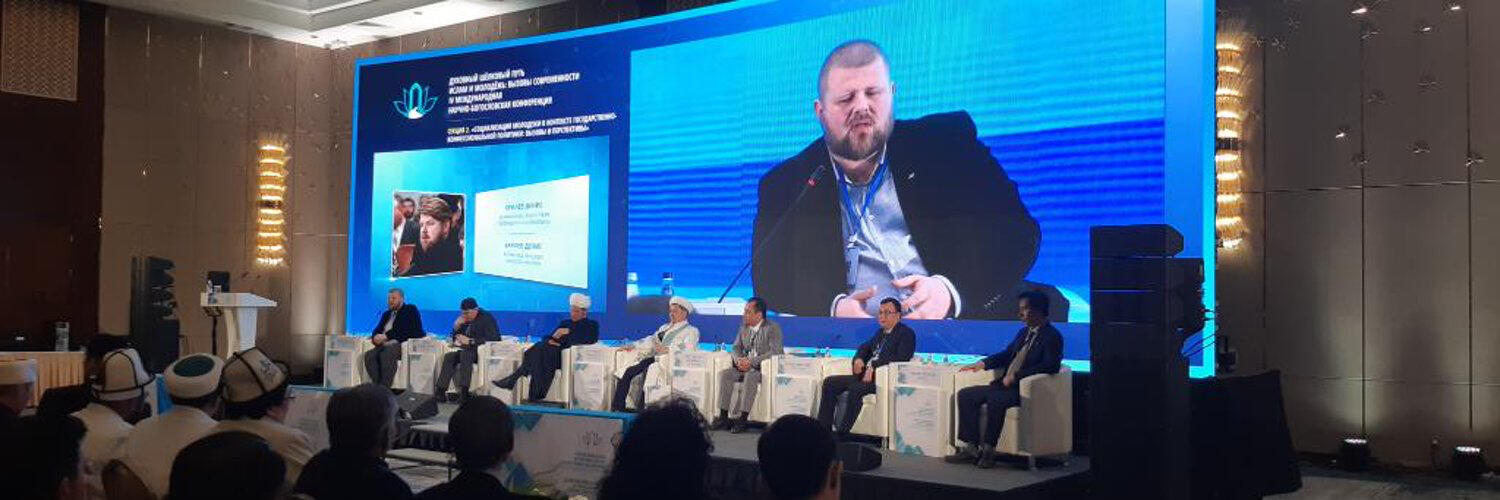
Denys Brylov speaking at an international conference on religion, security, and interreligious dialogue in Central Asia. Photo from the personal archive of Denys Brylov.
PEACEBUILDING & INTERRELIGIOUS DIALOGUE
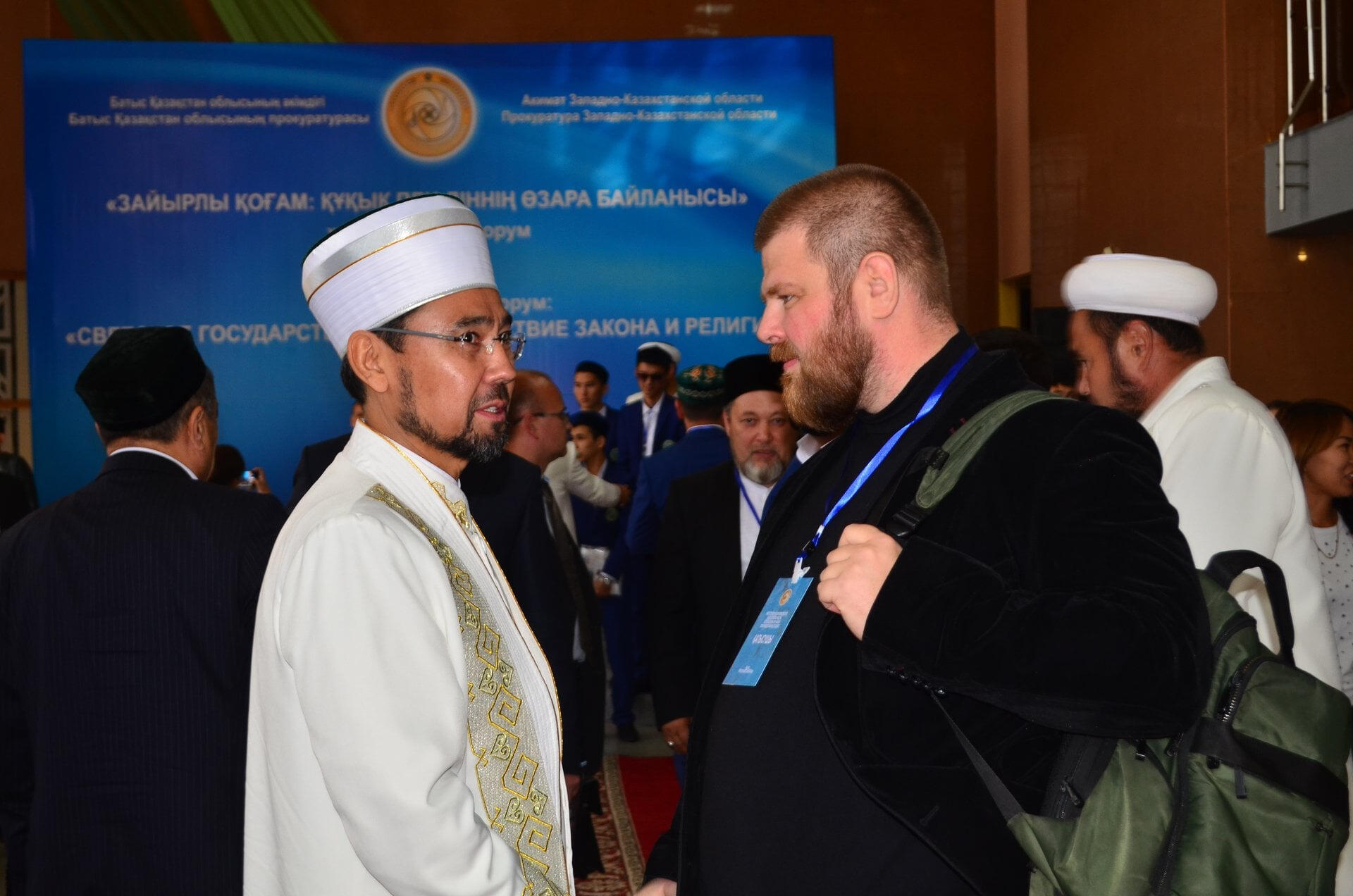
Denys Brylov in conversation with Serikbay Oraz, former Supreme Mufti of Kazakhstan. From the personal archive of Denys Brylov.
Denys Brylov’s peacebuilding work focuses on dialogue facilitation, interreligious communication, conflict transformation, and the development of trust-based cooperation between religious and secular communities in Ukraine.Since 2016, he has been involved in dialogue initiatives, facilitation programs, and research projects dedicated to social cohesion, religious pluralism, and peacebuilding in contexts of conflict and war. His work combines academic research with practical engagement in the fields of mediation, interreligious dialogue, and community-based peacebuilding.Brylov is a co-founder and executive director of Dialogue in Action, a Ukrainian peacebuilding initiative that creates spaces for dialogue and cooperation between religious and non-religious communities. The organization works with religious leaders, civil society actors, local communities, lawyers, educators, and facilitators across Ukraine, developing practices of trust-building, open communication, and conflict-sensitive interaction.Dialogue in Action describes its mission as developing a culture of dialogue within Ukrainian society through trust, mutual respect, and “radical honesty.” Since 2016, the initiative has conducted facilitated dialogues, consultations, trainings, analytical projects, and educational programs aimed at strengthening social cohesion and constructive communication in wartime Ukraine.Brylov’s work also includes analytical and policy-oriented research on religion and peacebuilding in Ukraine. His publications examine the role of religious actors in conflict transformation, interfaith cooperation, and the peacebuilding potential of religious communities.The dialogue-based approaches developed by Ukrainian peacebuilding practitioners have received international recognition and have been discussed within broader international conversations on mediation, conflict transformation, and adaptive peacebuilding.
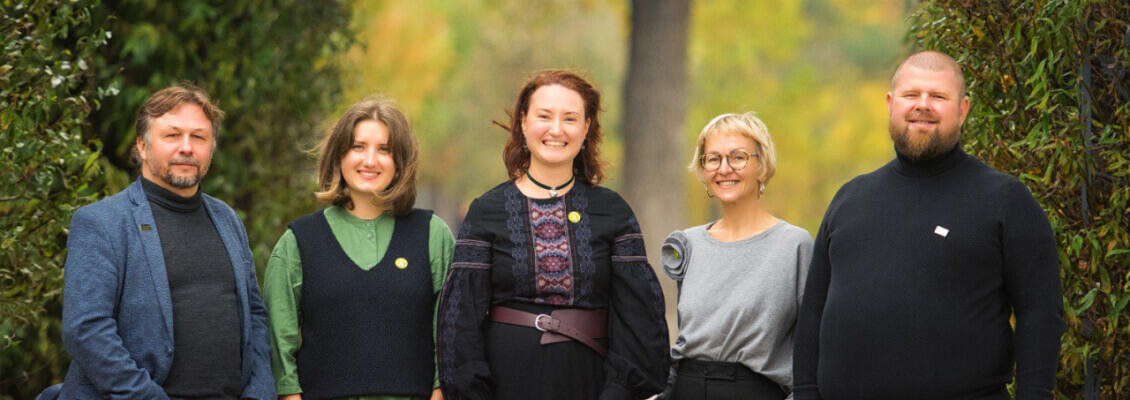
Members of the Dialogue in Action community. Photo courtesy of Dialogue in Action.
CURRICULUM VITAE
Current Position2025 – present
Head of the Modern Studies Department,
A. Krymskyi Institute of Oriental Studies, National Academy of Sciences of Ukraine (Kyiv)
Previous Positions2023 – 2025
Associated Researcher, Leibniz-Zentrum Moderner Orient (Berlin)2022 – 2024
Senior Researcher, A. Krymskyi Institute of Oriental Studies, National Academy of Sciences of Ukraine (Kyiv)2016 – 2022
Associate Professor, Department of Theology and Religious Studies, National Pedagogical Dragomanov University (Kyiv)2011 – 2016
Associate Professor, Department of Culturology, National Pedagogical Dragomanov University (Kyiv)
Education2021
Doctor of Philosophical Sciences (DSc) in Religious Studies and Theology
National Pedagogical Dragomanov University2011
PhD in Religious Studies
Taras Shevchenko National University of Kyiv1998 – 2003
MA in Psychology
Donetsk Institute of Social Education
Research InterestsReligion and conflict
Peacebuilding and social cohesion
Islam in Ukraine
Religious pluralism in Eastern Europe
War, identity, and political transformation
Muslim communities in post-Soviet societies
LanguagesUkrainian
Russian
English
IMPRINT & PRIVACY
IMPRESSUMDenys Brylov
Berlin, GermanyEmail: [email protected]This is a personal, non-commercial website created in the context of academic and analytical work.The website presents research, publications, analytical papers, and peacebuilding activities associated with the author’s academic and professional work.No commercial activity is pursued through this site.
PRIVACY POLICYThis website does not collect or store personal data.It does not use cookies, analytics tools, contact forms, or embedded tracking services.However, this website may contain links to external institutions and platforms, including academic and partner organizations such as the Leibniz-Zentrum Moderner Orient (ZMO), the A. Krymskyi Institute of Oriental Studies of the National Academy of Sciences of Ukraine, and Dialogue in Action. These external websites may collect user data independently when accessed. Please consult their respective privacy policies for further information.No responsibility is taken for the content or privacy practices of linked external websites.For questions regarding this website, contact:[email protected]